
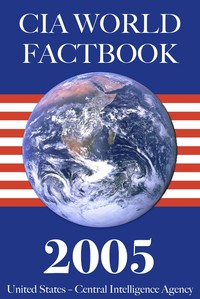
The 2005 CIA World Factbook by United States. Central Intelligence Agency
Let's be clear from the start: this is not a book you read cover-to-cover. The 2005 CIA World Factbook is a reference work, a massive collection of standardized entries for 267 world entities. Each country profile follows the same format, breaking down geography, people, government, economy, communications, transportation, military, and transnational issues. It's a data dump, pure and simple.
The Story
There's no traditional plot. The 'story' is the state of the planet in 2005. You get the GDP of Luxembourg, the ethnic breakdown of Indonesia, the coastline length of Chile, and the internet country code for Tuvalu. It presents the world in a series of comparable, cold facts. The narrative emerges when you start connecting dots—seeing which economies were booming before the 2008 crash, noting the political systems in place before the Arab Spring, or observing the military data of nations that would soon become focal points of international news.
Why You Should Read It
I love this book for its brutal objectivity and its role as a historical artifact. There's no opinion, no spin—just lists, numbers, and brief descriptions. In our age of information overload and hot takes, that's refreshing. It’s also a powerful reminder of how much the world has changed. Reading the entry for Iraq or Afghanistan in 2005 hits differently now. It gives context to everything that came after. For writers, trivia lovers, or anyone who plays geopolitical board games, it's an endless source of 'oh, that's interesting' moments. It turns abstract concepts about countries into concrete, comparable details.
Final Verdict
This is a niche book, but a brilliant one. It's perfect for history and politics nerds, novelists needing quick setting research, teachers looking for primary source material, or anyone with a deep curiosity about how the world works (or worked). If you enjoy almanacs, maps, or falling down Wikipedia rabbit holes, you'll find a similar joy here. Don't buy it expecting a gripping narrative. Buy it as the ultimate browser's guide to a specific moment in recent history. Keep it on your desk or coffee table. I promise you'll pick it up more often than you think.
There are no legal restrictions on this material. Use this text in your own projects freely.
Patricia Thomas
8 months agoVery satisfied with the depth of this material.
Emily Brown
9 months agoThe index links actually work, which is rare!
Robert Davis
8 months agoRead this on my tablet, looks great.
Oliver Harris
1 year agoGood quality content.
Richard Lopez
11 months agoAfter spending a few days with this digital edition, the formatting on mobile devices is surprisingly crisp and clear. Well worth the time invested in reading it.