
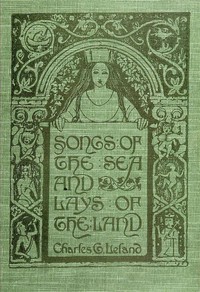
Songs of the Sea and Lays of the Land by Charles Godfrey Leland
Let's get one thing straight: this isn't a novel. 'Songs of the Sea and Lays of the Land' is a collection, a scrapbook of voices that Charles Godfrey Leland feared would be lost. Published in 1895, it feels like his personal project to document the working-class poetry and song of America and Britain before industrialization smoothed everything over.
The Story
There's no single plot. Instead, the book is split into two clear sections. The 'Songs of the Sea' are exactly that: ballads of whalers, chanteys from clipper ships, and tales of storms and mermaids, straight from the mouths of sailors. The 'Lays of the Land' shifts to the countryside, gathering poems about planting, hunting, local legends, and the hard, simple life of farming communities. Leland acted as both collector and translator, often presenting the dialect and rough edges exactly as he heard them.
Why You Should Read It
You read this for the atmosphere, not for polished verse. The power is in its authenticity. When a whaler describes the thrill and horror of the hunt, or a farmer curses a stubborn frost, it feels immediate. Leland wasn't a distant academic; he was right there with his notebook, obsessed with preserving what he called 'folk-speech.' This gives the whole book a frantic, heartfelt energy. It's messy, repetitive in places, and brilliantly human. You're not getting Shakespeare—you're getting the thoughts of people who lived by their hands, and that's somehow more compelling.
Final Verdict
This is a niche read, but a rewarding one. It's perfect for history buffs who want to go beyond dates and battles, for writers looking for authentic voices, or for anyone who loves folk music and wants to see its roots on the page. If you prefer tight, elegant poetry, you might find it rough. But if you're curious about the real stories and songs that floated on the wind and water over a century ago, Leland's collection is a unique and gritty treasure.
There are no legal restrictions on this material. Preserving history for future generations.
William Brown
3 months agoLooking at the bibliography alone, the objective evaluation of the pros and cons is very refreshing. It cleared up a lot of the confusion I had previously.
Linda Wilson
8 months agoI took detailed notes while reading through the chapters and the nuanced approach to the central theme was better than I expected. A trustworthy resource that I'll keep in my digital library.
David Brown
1 year agoThe research depth is palpable from the very first chapter.
Emily Davis
2 years agoFrom a researcher's perspective, the visual layout and supporting data make the reading experience very smooth. A rare gem in a sea of mediocre content.








George Miller
2 months agoThe clarity of the concluding remarks is very professional.