
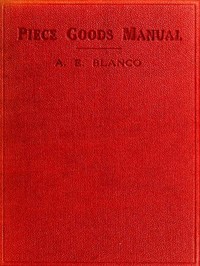
Piece Goods Manual by A. E. Blanco
Let's be clear from the start: Piece Goods Manual is not a novel. There are no characters, no sweeping plot, and definitely no dragons. What it is, is a meticulously organized reference book from 1914, written by A.E. Blanco for the textile trade. It's a guide that explains, in astonishing detail, every kind of fabric you could imagine at the time: woolens, cottons, silks, linens. It tells you how they're made, how to tell good quality from bad, their standard widths and weights, and even how much they should cost.
The Story
There's no traditional story here. Instead, the 'narrative' is the journey of material itself. The book walks you through the entire universe of early 20th-century textiles. It starts with raw materials like wool and cotton, explains the spinning and weaving processes, and then catalogs the finished products—from practical flannel for work shirts to delicate chiffon for evening gowns. It's a systematic, almost obsessive, effort to bring order and knowledge to a trade that was fundamental to daily life. The 'plot' is humanity's attempt to master and understand the stuff that literally surrounded them.
Why You Should Read It
You should read it for the sheer, unexpected magic of the details. This is where the book comes alive. You learn that 'linsey-woolsey' was a common, durable fabric for poor folks' clothing. You discover the very specific definitions of 'broadcloth' versus 'kersey.' The book assumes a level of common knowledge that has completely vanished. Reading it makes you realize how disconnected we are from the origins of the things we use every day. When you touch a shirt now, you think 'cotton.' Blanco's reader would have thought about the grade of cotton, the weave, the finish, and the fair market price per yard. It's a mind-bending shift in perspective. It turns a simple piece of cloth into a story of industry, geography, and social class.
Final Verdict
This book is a niche treasure. It's perfect for historical fiction writers who want to get the details of their world painfully right—no more anachronistic fabrics! It's for fashion historians, textile artists, and anyone with a deep curiosity about material culture. If you love poking around in old archives or get a thrill from primary sources that show how people actually lived, you'll find this fascinating. It's not a page-turner in the classic sense, but it is a profoundly absorbing snapshot of a world told through the threads that held it together. Approach it like an archaeological dig, and you'll be richly rewarded.
The copyright for this book has expired, making it public property. It is available for public use and education.
Susan Williams
9 months agoIf you enjoy this genre, the clarity of the writing makes this accessible. Exactly what I needed.
Kimberly Rodriguez
1 year agoAfter hearing about this author multiple times, it creates a vivid world that you simply do not want to leave. A valuable addition to my collection.


Robert Torres
5 months agoGreat digital experience compared to other versions.