
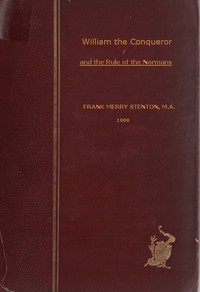
William the Conqueror and the Rule of the Normans by F. M. Stenton
Frank Stenton's William the Conqueror and the Rule of the Normans is one of those rare history books that delivers both solid facts and a seriously good read. I’ll be honest—when I first picked it up, I expected to soldier through dense academic prose. Instead, I found myself caught up in a story more tangled and gripping than most fiction.
The Story
It's not the whole heroic legend of 1066, though Stenton covers that battle in clear, punchy prose. Instead, the real story begins after the win. William was a foreign duke who spoke a different language and ruled through a violent mix of castle-building, land flipping, and terror tactics. Stenton guides you through the creation of the Domesday Book—not as a dusty medieval bureaucracy tidbit, but as a political power play that could have exploded into rebellion. The Normans didn't just win a battle; they invented a way to control a country they stole. The book walks you through how William handled piles of money, whiny barons, and maybe sketchy legal moves that let a handful of thugs rule millions.
Why You Should Read It
What blew me away was how Stenton makes you feel the people behind the politics. William comes through as an absolute master of the long game—charismatic yes, but also suspicious, selfish, and ruthless when he needed to be. You'll feel the dread of an Anglo-Saxon under the Normans: looking up at a stone castle not far from your old wooden fence, knowing your land might be handed to some foreign fop. But Stenton doesn't paint English history in black-and-white—the Normans weren't just villains but creative state-builders. Reading this, I finally understood why England today still bears the unmistakable shape of its Norman overlords, from its legal system to its DNA.
Final Verdict
If you loved Neil Oliver's history moments on TV or just want know more than what a textbook can give, this is the book. It works for younger students needing a readable source and for adults who want a smart takedown without the boredom. Stenton is fair, vividly descriptive, and trusts the reader to keep up without dumbing down the drama. If you've ever wondered how a narrow crossing allowed just enough people from a petty Duchy to change England forever—buy it. With your respect and engagement guaranteed.
No rights are reserved for this publication. Preserving history for future generations.
Patricia Jackson
1 year agoExceptional clarity on a very complex subject.





Michael Thompson
1 year agoIt took me a while to process the complex ideas here, but the case studies and practical examples provided add immense value. I'll be citing this in my upcoming project.