
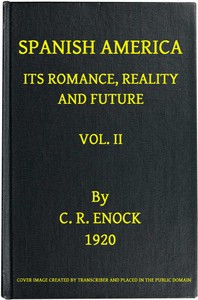
Spanish America, Its Romance, Reality and Future, Vol. 2 (of 2) by Enock
Let's set the scene: it's the early 1900s. Charles Reginald Enock, a British man with a background in engineering and surveying, isn't just reading about Latin America—he's been there. A lot. 'Spanish America, Its Romance, Reality and Future' is his attempt to make sense of everything he saw, from Mexico down to Argentina and Chile.
The Story
This isn't a novel with a plot, but it has a clear narrative drive. Enock structures his journey as a grand tour. He starts by painting a vivid picture of the 'romance'—the stunning geography, the vast mineral wealth, the agricultural promise, and the rich, layered history of the continents. Then, he shifts gears hard into the 'reality.' This is where he gets into the nitty-gritty: shaky governments, social divides, underdeveloped infrastructure, and how European and American business interests (often British, like himself) were shaping economies. The final section, 'the future,' is his attempt at diagnosis and prediction. He proposes solutions, debates different forms of government, and speculates on which nations are poised for success. The 'story' is the tension between his obvious awe for the region and his clear-eyed, sometimes critical, analysis of its challenges.
Why You Should Read It
The magic here is the perspective. You're not getting a modern, academic analysis. You're getting the immediate, unfiltered observations of a knowledgeable outsider from over 110 years ago. His biases are on full display (the colonial mindset peeks through occasionally), which makes it a fantastic exercise in reading critically. You'll catch yourself nodding along with a sharp point about resource dependency, then wincing at an outdated cultural generalization. It's a primary source that reads like a passionate, opinionated blog series. You see the roots of so many contemporary discussions about Latin America's development, foreign influence, and national identity. It’s history without the polish, full of fascinating details about railroads, nitrate mines, and political figures who've been largely forgotten.
Final Verdict
This is a niche pick, but a rewarding one. It's perfect for history enthusiasts who want to go beyond textbooks and hear a direct voice from the past. If you're interested in Latin American studies, economics, or the history of travel writing, this is a goldmine. It's also great for anyone who loves comparing past predictions to present reality. Fair warning: it's a product of its time, so approach it with a curious but critical mind. Don't expect a balanced, modern overview—expect a compelling, personal, and deeply opinionated snapshot that makes you think about how the past informs the present.
This historical work is free of copyright protections. Knowledge should be free and accessible.
Kimberly Martinez
1 year agoI appreciate how this edition approaches the core problem, the inclusion of diverse viewpoints strengthens the overall narrative. Thanks for making such a high-quality version available.
Richard Harris
4 months agoIt took me a while to process the complex ideas here, but the language used is precise without being overly academic or confusing. This adds significant depth to my understanding of the field.





Charles Thompson
2 months agoI stumbled upon this title during my weekend research and the author manages to bridge the gap between theory and practice effectively. This should be on the reading list of every serious professional.