
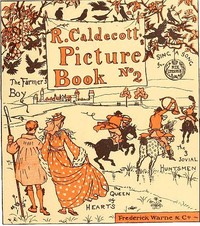
R. Caldecott's Picture Book (No. 2) by Randolph Caldecott
Let's be clear from the start: this isn't a novel. R. Caldecott's Picture Book (No. 2) is a time capsule of joy from 1879, collecting four classic nursery rhymes and songs. We get the cumulative chaos of 'The House That Jack Built,' the pastoral charm of 'The Milkmaid,' the quirky animal tale of 'The Farmer's Boy,' and the sweet simplicity of 'The Three Jovial Huntsmen.' The words themselves are short, rhythmic, and familiar—the kind you might half-remember from childhood.
The Story
The real story isn't in the verses. It unfolds in Caldecott's illustrations. He takes these simple rhymes and builds a whole visual world around them. In 'The House That Jack Built,' you watch the chaos escalate with each page as more animals and people cram into the scene, their expressions getting more and more frantic. In 'The Three Jovial Huntsmen,' the supposedly skilled hunters are comically oblivious to the wildlife hiding right behind them. The plot is in the details: a dog's wagging tail, a maid's surprised glance, a cow's utterly unimpressed stance. Caldecott's art adds humor, movement, and personality that the text alone never could.
Why You Should Read It
You should read it to remember that books can be pure fun. There's no heavy lesson, just clever artistry and warmth. Caldecott was a pioneer for a reason. He broke the mold of static, decorative pictures. His characters move; they have personality. You see the influence of his lively, sketch-like style in everything from Beatrix Potter to modern animated cartoons. Reading this feels like having a friendly, witty guide showing you all the jokes hidden in a nursery rhyme. It’s a reminder that great children's literature respects its audience's intelligence and sense of humor, no matter their age.
Final Verdict
This book is a perfect little escape for anyone who loves art, history, or just needs a five-minute mood boost. It's essential for aspiring illustrators or children's book writers—this is foundational stuff. Parents and grandparents will love sharing these vibrant, funny pages with kids (though be ready for giggles). And for the rest of us? It's a beautifully crafted piece of publishing history that still feels fresh and genuinely funny. Keep it on your coffee table. You won't regret it.
This title is part of the public domain archive. It serves as a testament to our shared literary heritage.
Matthew Johnson
6 months agoThis was exactly the kind of deep dive I was searching for, the author’s unique perspective adds a fresh layer to the discussion. Finally, a source that prioritizes accuracy over hype.
Donald White
1 year agoVery satisfied with the depth of this material.
Elizabeth Hernandez
1 year agoThe balance between academic rigor and readability is perfect.
George Martinez
8 months agoImpressive quality for a digital edition.
Michael Martin
11 months agoVery satisfied with the depth of this material.