
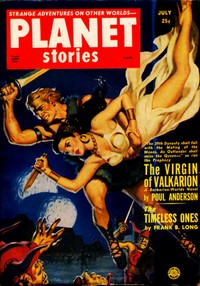
Mercy Flight by Mack Reynolds
Mack Reynolds was a master of 'what if' stories grounded in the politics of his day, and Mercy Flight is a perfect example. Written when every newspaper headline was about rockets and rival superpowers, it feels both thrillingly of its time and oddly relevant now.
The Story
The plot is straightforward but packed with tension. A Soviet spacecraft has a catastrophic failure, leaving a cosmonaut alive but trapped in a decaying orbit. Back on Earth, the news hits like a bomb. In a world divided by an Iron Curtain, the United States possesses the only vehicle—a prototype 'mercy ship'—with a chance to pull off a rescue. The story follows the frantic, behind-the-scenes scramble as politicians, military leaders, and the astronauts themselves wrestle with a monumental decision: do they risk an unprecedented, politically explosive mission to save a rival's life, or do they let ideology and fear win? The clock is ticking, both in orbit and in the halls of power.
Why You Should Read It
What I love about this book is its heart. Beneath the sci-fi trappings, it's a story about our better angels. Reynolds asks a simple, powerful question: when someone's life is on the line, can we see past the flags on their shoulders? The characters aren't deeply psychological studies, but they feel real—burdened by duty, suspicion, and a flicker of hope. You get the sweaty-palmed tension of the technical rescue, but the real drama is in the conference rooms. It's a hopeful, humanist take from an era often defined by its pessimism.
Final Verdict
Mercy Flight is a gem for readers who love classic science fiction with a big idea at its core. It's perfect for history buffs curious about Cold War-era sci-fi, or anyone who enjoys stories where the conflict comes from human nature, not laser blasts. It's a short, focused novel that delivers a complete, satisfying punch. Don't expect modern, gritty realism or complex world-building; instead, enjoy it as a smart, optimistic snapshot of a moment when we looked to the stars and wondered if we could be better than we were.
This historical work is free of copyright protections. It serves as a testament to our shared literary heritage.
Sarah Harris
11 months agoThe information is current and very relevant to today's needs.
Emily Thompson
10 months agoThe author provides a very nuanced critique of current methodologies.
Richard Lopez
5 months agoHaving followed this topic for years, I can say that the language used is precise without being overly academic or confusing. I'll be citing this in my upcoming project.
Mary Thompson
6 months agoHaving followed this topic for years, I can say that the attention to detail regarding the core terminology is flawless. A perfect balance of theory and practical advice.




Joseph Smith
1 year agoAfter spending a few days with this digital edition, it addresses the common misconceptions in a very professional manner. I appreciate the effort that went into this curation.